


Introduction
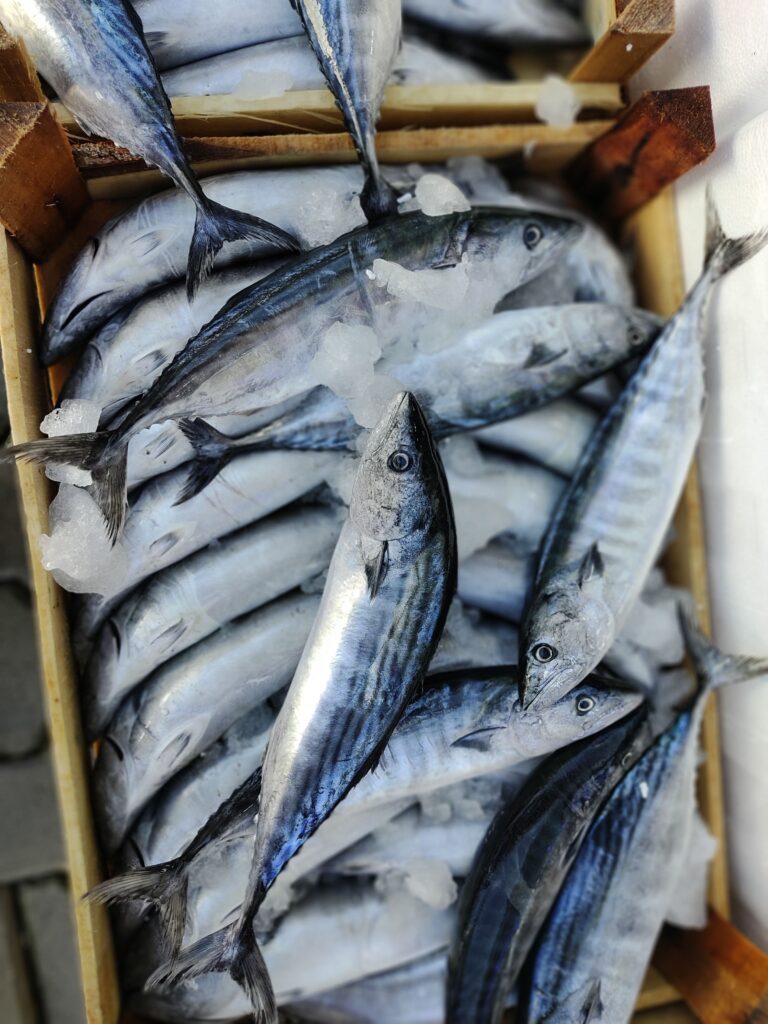
The Skipjack Tuna (Katsuwonus pelamis), locally known in Somalia as Sanuuro, is one of the most abundant and commercially important tuna species in the world. It is a highly migratory pelagic fish found throughout tropical and subtropical oceans.
Although it is the smallest of the major commercial tuna species, Skipjack Tuna supports some of the world’s largest fisheries and is widely used in the canned tuna industry. In Somalia, it is among the most commonly landed tuna species and is available in markets throughout the year.
Scientific Classification
| Taxonomic Rank | Classification |
|---|---|
| Kingdom | Animalia |
| Phylum | Chordata |
| Class | Actinopterygii |
| Order | Scombriformes |
| Family | Scombridae |
| Genus | Katsuwonus |
| Species | Katsuwonus pelamis |
Physical Characteristics
Skipjack Tuna can be easily identified by its streamlined body and distinctive coloration.
The upper body is dark blue to purple, while the belly is silvery white. One of its most recognizable features is the presence of four to six dark horizontal bands running along the lower sides of the body.
Identification Features
| Feature | Description |
|---|---|
| Body Shape | Streamlined and torpedo-shaped |
| Back Color | Dark blue to purple |
| Belly Color | Silvery white |
| Markings | Four to six dark horizontal bands |
| Habitat Type | Pelagic (open ocean) |
Size and Growth
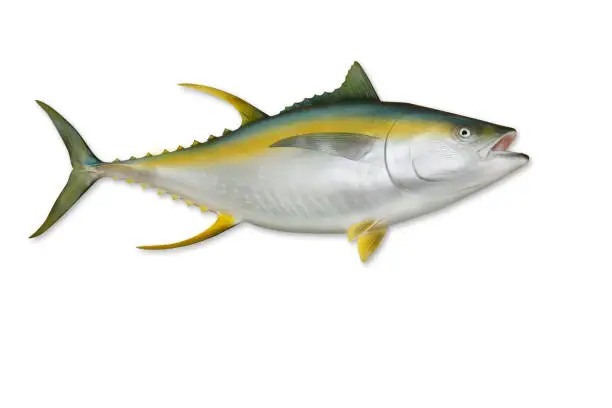
Skipjack Tuna is generally smaller than Yellowfin, Bigeye, and Bluefin tunas.
| Characteristic | Information |
|---|---|
| Maximum Length | Up to 3 feet (about 1 meter) |
| Maximum Weight | Over 70 pounds (about 32 kg) |
| Common Market Weight | 15–25 pounds (7–11 kg) |
Its rapid growth rate contributes significantly to its resilience and commercial success.
Distribution and Habitat
Skipjack Tuna is widely distributed throughout tropical and subtropical waters of the:
- Atlantic Ocean
- Indian Ocean
- Pacific Ocean
It is a pelagic species that spends most of its life in the open ocean rather than near the seafloor.
Skipjack Tuna often forms large schools near the ocean surface but is capable of diving to depths of approximately 850 feet (260 meters) during the day.
Behavior and Schooling
Skipjack Tuna is highly migratory and travels in large schools. These schools may consist entirely of Skipjack Tuna or may mix with other tuna species.
Schooling behavior helps individuals locate food-rich areas and provides protection from predators.
Young Skipjack Tuna are commonly found schooling alongside juvenile Yellowfin and Bigeye Tuna.
Feeding Ecology
Skipjack Tuna is an opportunistic predator that feeds on a wide variety of prey available in the open ocean.
Its diet includes:
- Small fish
- Crustaceans
- Squid
The species actively hunts during daylight hours and plays an important role in marine food webs.
Diet Summary
| Food Group | Examples |
|---|---|
| Fish | Small pelagic fishes |
| Crustaceans | Shrimp and other crustaceans |
| Cephalopods | Squid |
Reproduction
One of the reasons Skipjack Tuna remains abundant is its rapid growth and early reproduction.
Females can spawn multiple times throughout the year in warm tropical waters, producing large numbers of eggs. This high reproductive capacity helps maintain healthy populations despite intense fishing pressure.
Economic Importance
Skipjack Tuna is one of the most economically valuable fish species in the world.
It accounts for approximately 60% of global tuna landings, making it the most heavily harvested tuna species.
The species supports commercial fisheries across tropical oceans and forms the backbone of the global canned tuna industry.
In Somalia, Skipjack Tuna is among the most frequently landed tuna species and is highly valued as a food fish. It is available in local markets throughout the year and contributes significantly to fisheries and coastal livelihoods.
Conservation Status
According to the most recent assessment by the International Union for Conservation of Nature (IUCN Red List) in 2021, Skipjack Tuna is classified as:
Least Concern (LC)
Despite heavy fishing pressure worldwide, the species remains relatively resilient because of its:
- Fast growth rate
- Early reproductive maturity
- High reproductive output
- Large global population
Skipjack Tuna in Somalia
Somali waters provide favorable habitat for Skipjack Tuna due to their productive tropical marine environment.
The species is one of the most commonly landed tunas in Somalia and is targeted by both artisanal and commercial fisheries. Because it is available throughout the year and widely consumed, Skipjack Tuna plays an important role in food security and the fisheries economy of Somalia.
Conclusion
Skipjack Tuna (Katsuwonus pelamis), locally known as Sanuuro, is one of the world’s most abundant and commercially important tuna species. Its fast growth, early reproduction, and adaptability have made it the dominant species in global tuna fisheries. In Somalia, it remains one of the most valuable and frequently landed tuna species, supporting livelihoods, food security, and the country’s growing fisheries sector.