
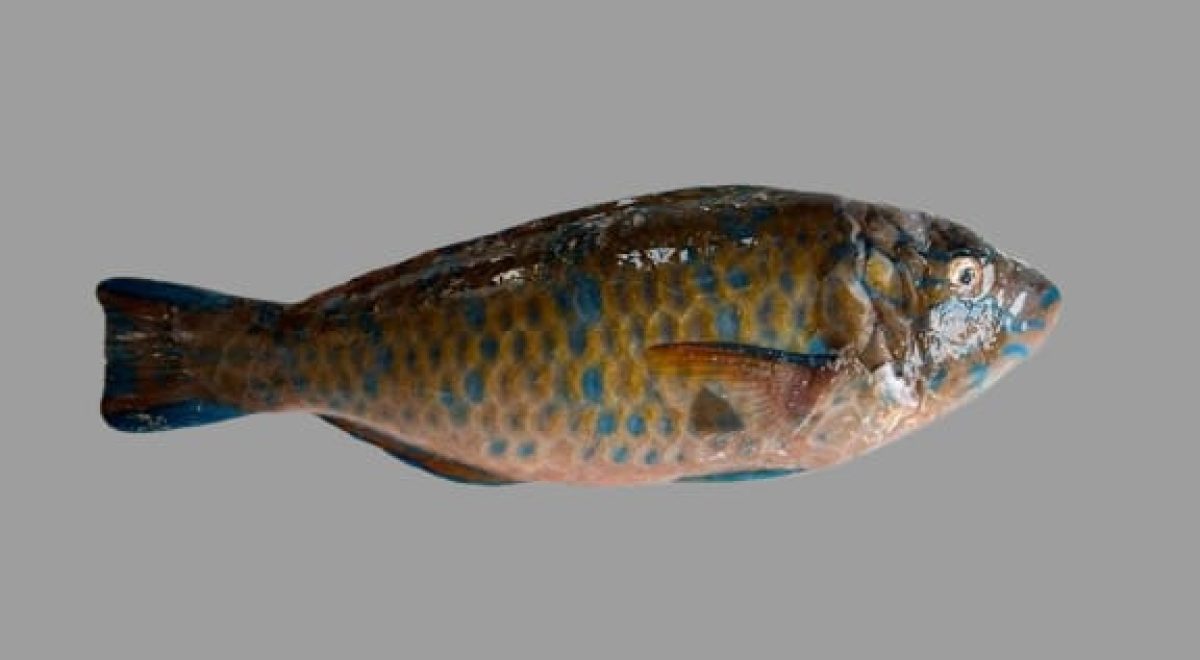
The dusky parrotfish, scientifically known as Scarus niger and locally called Maambiyo in Somalia, is one of the important herbivorous reef fish species found in the tropical waters of the Indian Ocean, including parts of the Somali coastline.
Parrotfish are widely recognized for their grazing behavior and their contribution to controlling algae growth on coral reefs. Healthy populations of parrotfish are often associated with stable and productive reef ecosystems.
Scientific Classification
| Taxonomic Rank | Classification |
|---|---|
| Kingdom | Animalia |
| Phylum | Chordata |
| Class | Actinopterygii |
| Order | Labriformes |
| Family | Scaridae |
| Genus | Scarus |
| Species | Scarus niger |
Common Name
- Dusky Parrotfish
Distribution in Somali Waters
Scarus niger is commonly associated with:
- Coral reef ecosystems
- Shallow tropical coastal waters
- Reef slopes and lagoons
Along the Somali coast, this species is more likely to occur in warmer reef-associated habitats, especially in southern coastal regions where coral reef development is more favorable.
The species is distributed throughout the Indian Ocean and parts of the western Pacific Ocean.
Physical Characteristics
The dusky parrotfish has a laterally compressed body and strong beak-like teeth formed by fused dental plates. These specialized mouthparts allow the fish to scrape algae from coral and rocky surfaces.
Average Size
- Common length: 25–35 cm
- Maximum length: approximately 45 cm
Weight
- Usually between 0.5–1.5 kg depending on age and habitat conditions
Lifespan
- Estimated lifespan: approximately 5–10 years
Like many parrotfish species, Scarus niger may display different color patterns during various life stages.
Feeding Ecology
The dusky parrotfish is primarily herbivorous and feeds mainly on:
- Algae
- Algal films
- Small organic particles attached to reef surfaces
While feeding, the fish scrapes algae from coral substrates using its beak-like mouth.
This grazing behavior is ecologically important because excessive algae growth can compete with corals for space and light.
Ecological Importance
1. Algae Control
Parrotfish help prevent algal overgrowth on coral reefs. Without herbivorous fish, algae can dominate reef surfaces and reduce coral survival.
2. Coral Reef Health
By grazing algae, Scarus niger indirectly supports coral growth and reef resilience.
3. Sediment Production
While feeding, parrotfish break down small pieces of coral material, contributing to the production of fine marine sediments and reef sands.
4. Food Web Role
The species occupies an important trophic role within reef ecosystems by transferring energy from primary producers to higher trophic levels.
Threats
Several environmental pressures may affect parrotfish populations in Somali waters:
- Overfishing
- Coral reef degradation
- Climate change
- Coral bleaching
- Coastal pollution
A decline in herbivorous fish populations can negatively affect reef stability and biodiversity.
Conclusion
The dusky parrotfish (Scarus niger) is an ecologically significant coral reef fish found in tropical Indian Ocean ecosystems, including parts of Somalia’s coastal waters. Through its grazing activity, the species helps maintain coral reef balance by controlling algae and supporting reef resilience.
Protecting herbivorous reef fish such as parrotfish is important for conserving Somalia’s coral reef ecosystems and maintaining long-term marine biodiversity.