


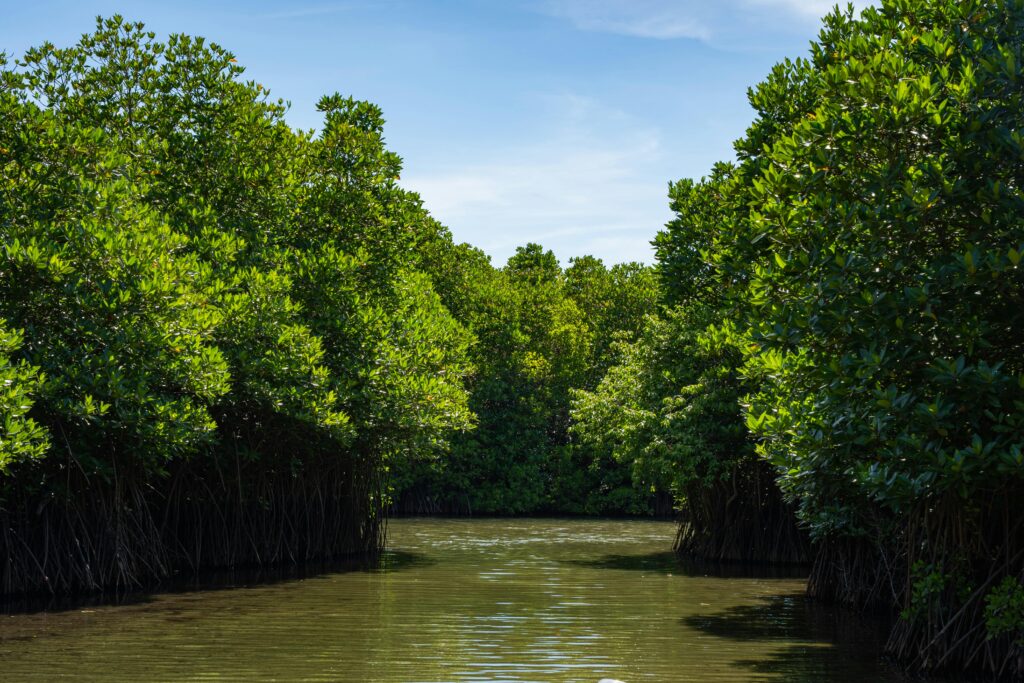
Guardians of Marine Biodiversity
Mangroves are unique trees and shrubs that have adapted to survive in salty coastal environments. They grow in intertidal zones, the areas between land and sea that are regularly flooded and exposed by the rise and fall of tides. Mangrove forests are found throughout tropical and subtropical regions of the world, where they form some of the most productive and ecologically important ecosystems on Earth.
A mangrove ecosystem includes not only the mangrove trees themselves but also the surrounding soil, microorganisms, algae, fish, birds, crustaceans, and other organisms that depend on this habitat. Together, these components create a complex ecosystem that supports marine biodiversity and coastal stability.
Adaptations of Mangroves
Mangroves possess remarkable adaptations that allow them to thrive in harsh coastal environments.
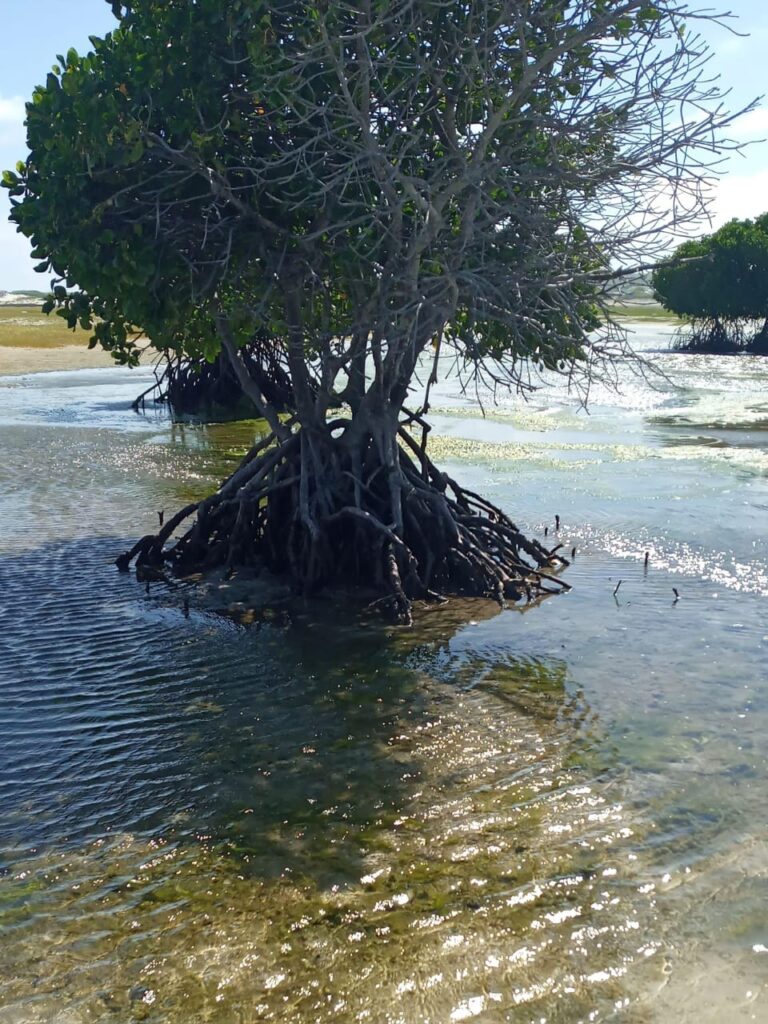
One of their most distinctive features is their aerial root system. These specialized roots extend above the soil and water surface, allowing the trees to obtain oxygen in waterlogged sediments where oxygen levels are very low. These roots act like natural snorkels, helping the trees breathe even during high tide.
The tangled root networks also help mangroves withstand strong waves, tidal currents, and storm surges. By slowing the movement of water, the roots trap sediments and reduce coastal erosion.
Ecological Importance of Mangroves
Coastal Protection
Mangrove forests act as natural barriers against coastal erosion. Their extensive root systems stabilize shorelines and reduce the impact of waves, tides, currents, and storms.
Nursery Grounds for Marine Life
Mangrove roots provide shelter and feeding grounds for many juvenile fish, crabs, shrimp, and other marine organisms. Young fish often spend the early stages of their lives among mangrove roots before moving to seagrass beds, coral reefs, or open ocean habitats.
Biodiversity Conservation
Mangroves support a wide variety of organisms, including fish, birds, reptiles, invertebrates, and microorganisms. Many species rely on mangrove habitats for feeding, breeding, and protection.
Carbon Sequestration
Mangrove ecosystems are among the world’s most efficient natural carbon sinks. They absorb carbon dioxide from the atmosphere and store large amounts of carbon within their biomass and soils. This process helps mitigate climate change and is often referred to as “blue carbon” storage.
Mangroves in Somalia
The Bajuni Islands: Somalia’s Largest Mangrove Stronghold
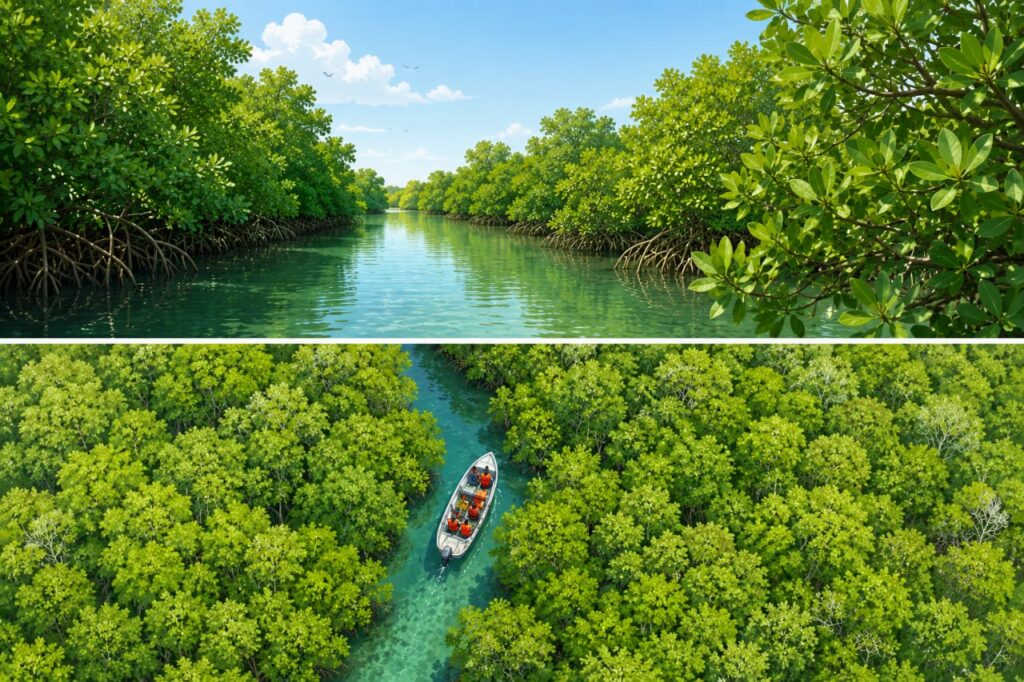
The Bajuni Archipelago, located in the Lower Juba region of southern Somalia, contains some of the most extensive mangrove forests in the country. The islands stretch along the southern Somali coast between Kismayo and Ras Kamboni and consist of several islands surrounded by shallow channels, tidal creeks, seagrass meadows, and coral reef habitats.
The sheltered waters and low-energy coastal environment around the Bajuni Islands create ideal conditions for mangrove growth. Dense mangrove forests line many of the tidal channels, where their intricate root systems trap sediments, stabilize shorelines, and provide important nursery grounds for fish, crabs, shrimp, and other marine organisms.
The Bajuni region is unique because mangroves, seagrass beds, and coral reefs occur in close proximity, creating one of Somalia’s richest marine ecosystems. These interconnected habitats support high biodiversity and contribute significantly to local fisheries.
Several mangrove species occur in the area, including Avicennia marina, Rhizophora mucronata, Ceriops somalensis, Bruguiera gymnorrhiza, Sonneratia alba, and Xylocarpus obovatus. In favorable conditions, mangrove trees can reach heights of 10–15 meters and form dense coastal forests.
Despite their ecological importance, the mangroves of the Bajuni Islands face threats from habitat degradation, unsustainable resource use, pollution, and climate change. Conserving these forests is essential for protecting biodiversity, supporting coastal communities, and maintaining the health of Somalia’s marine ecosystems.

some other Small mangrove forests occur around the estuary of the Juba River and along the coastline between the Juba River and the Kenyan border. Additional mangrove stands are found in parts of Somaliland and Puntland, particularly near Zeylac and east of Bosaso.
The mangrove species recorded in Somalia include:
- Avicennia marina
- Rhizophora mucronata
- Ceriops somalensis
- Bruguiera gymnorrhiza
- Sonneratia alba
- Xylocarpus obovatus
In favorable conditions, these mangroves can reach heights of 10–15 meters and form dense coastal forests. North of Mogadishu, mangroves are generally smaller and more scattered, with trees often reaching 5–6 meters in height.
Small mangrove patches are also reported near the village of Abay Dhaxan, close to Jazeera Beach, south of Mogadishu.
Threats to Somalia’s Mangroves
Despite their ecological importance, Somalia’s mangrove ecosystems face several threats, including:
- Habitat destruction
- Coastal development
- Pollution
- Unsustainable harvesting
- Climate change
- Environmental degradation
Decades of environmental pressure and weak conservation management have contributed to the degradation of some mangrove habitats. Protecting these ecosystems is essential for maintaining fisheries, conserving biodiversity, and safeguarding coastal communities.
Conclusion
Mangroves are among the most valuable coastal ecosystems in Somalia. Their roots protect shorelines, provide nursery habitats for fish, support biodiversity, and help combat climate change through carbon storage. Although their distribution is limited, Somalia’s mangrove forests play a crucial role in maintaining healthy coastal and marine ecosystems. Effective conservation and sustainable management will be essential to ensure these unique habitats continue to benefit future generations.