


Seagrasses Definition
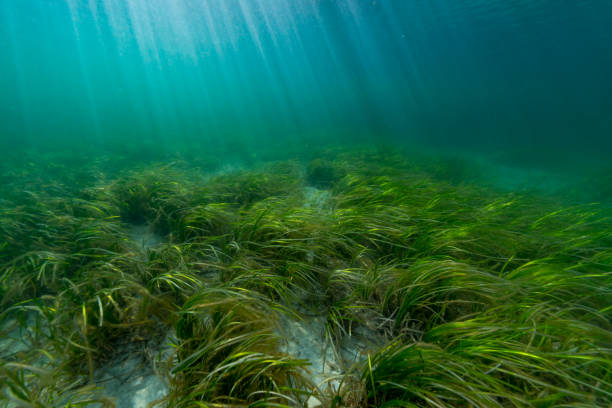
Seagrasses are true flowering plants that live entirely in marine environments. Unlike seaweeds, seagrasses possess roots, stems, leaves, flowers, and seeds, making them more closely related to terrestrial plants than to algae.
These remarkable plants thrive in shallow coastal waters, including salty and brackish environments, and are found in many parts of the world, from tropical regions to areas near the Arctic Circle. Under favorable conditions, seagrasses form extensive underwater meadows that can cover vast areas and, in some cases, are large enough to be observed from space.
Ecological Importance of Seagrasses
Seagrass meadows are among the most productive ecosystems on Earth. They provide food, shelter, and breeding grounds for a wide variety of marine organisms, including fish, crustaceans, sea turtles, marine mammals, birds, and numerous invertebrates.
These underwater habitats serve as important nursery grounds where juvenile fish can grow and find protection from predators before moving into deeper waters. It is estimated that approximately 20% of the world’s major fisheries depend on seagrass ecosystems during some stage of their life cycle.
Seagrasses also play a vital role in maintaining water quality. Their leaves slow water movement, allowing sediments to settle and improving water clarity. Their root systems stabilize the seabed and help reduce coastal erosion.
Blue Carbon Ecosystems
Seagrass meadows are important carbon sinks and are often referred to as “blue carbon” ecosystems. Although they occupy a relatively small area of the ocean floor, they store significant amounts of carbon in their biomass and sediments. Scientists estimate that seagrass ecosystems account for approximately 10% of the carbon stored in the ocean, helping to mitigate climate change.
Threats to Seagrass Meadows
Despite their ecological and economic importance, seagrass ecosystems are declining worldwide. Human activities have become one of the primary causes of seagrass loss.
Major threats include:
- Coastal development
- Pollution
- Sedimentation
- Destructive fishing practices
- Climate change
- Poor waste management
Because seagrass ecosystems are often hidden beneath the water’s surface, they frequently receive less conservation attention than coral reefs and mangrove forests.
Seagrasses in Somalia
Somalia possesses important seagrass habitats along its extensive coastline. Seagrass beds occur mainly along the southern coast, stretching from Adale to Ras Kamboni, while smaller beds are also found along parts of the Gulf of Aden.
These meadows support numerous marine species and contribute significantly to the productivity of Somalia’s coastal ecosystems. Together with coral reefs and mangrove forests, seagrass beds form interconnected habitats that sustain marine biodiversity and local fisheries.
Protecting Somalia’s seagrass ecosystems is essential for conserving marine life, supporting fisheries, storing carbon, and maintaining healthy coastal environments for future generations.
Conclusion
Although often overlooked, seagrass meadows are among the most valuable marine ecosystems on Earth. They provide habitat for countless species, support fisheries, improve water quality, store carbon, and protect coastal environments. Greater awareness and conservation efforts are needed to ensure the long-term survival of Somalia’s seagrass ecosystems.