


Seaweed Definition
Seaweed is the common name for numerous marine macroalgae that grow in oceans, seas, and other aquatic environments. While algae range from microscopic species suspended in the water column to large marine forms, the term “seaweed” generally refers to the larger, visible macroalgae. Microscopic algae, known as phytoplankton, form the foundation of marine food webs and play a vital role in ocean productivity.
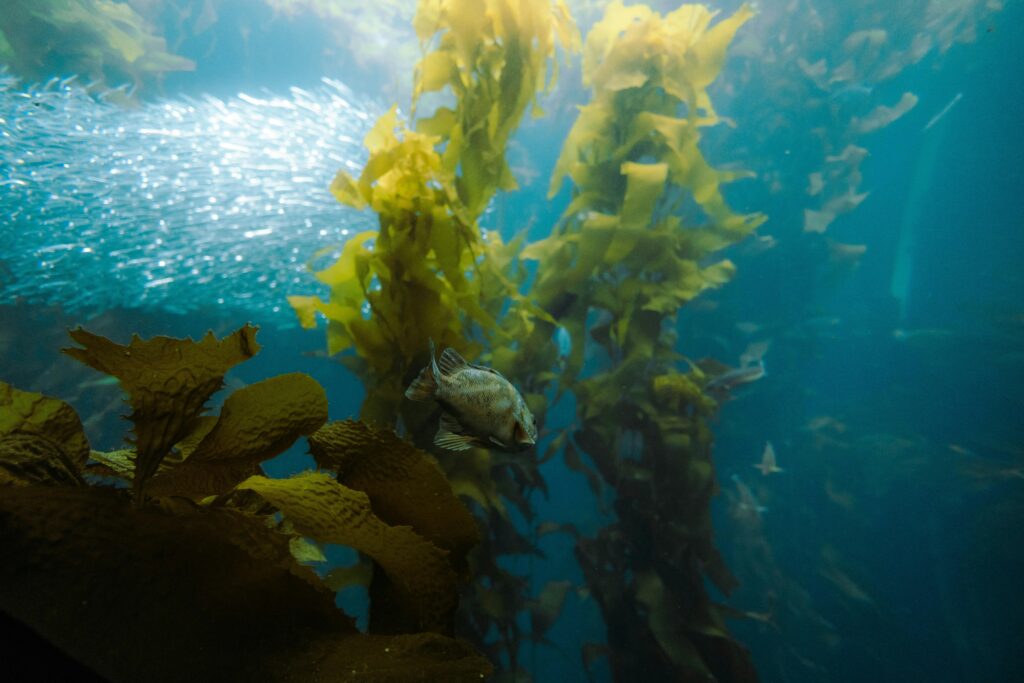
Some marine algae are enormous, such as giant kelp, which forms extensive underwater forests in temperate regions. These kelp forests can tower above the seafloor like underwater redwood forests, providing habitat and food for a wide variety of marine organisms. Most seaweeds are medium-sized and occur in a variety of colors, including red, green, brown, and black. They are commonly found attached to rocky shores and are often washed onto beaches and coastlines.
Unlike true plants, seaweeds do not possess roots, stems, or leaves. Instead, they have specialized structures such as holdfasts, which anchor them to rocks and other hard surfaces, and blades, which perform photosynthesis. Some species also possess stipes, stem-like structures that support the blades.
Seaweeds typically thrive in shallow, nutrient-rich coastal waters, particularly within the intertidal and subtidal zones, where sufficient sunlight is available for photosynthesis. However, certain species can also grow in deeper waters, especially in temperate and cold regions. Among the most productive marine ecosystems are kelp forests, which are dominated by large brown algae and support high levels of biodiversity.
Seaweed found in Somalia
The coastal waters of Somalia, including the Indian Ocean and the Gulf of Aden, host a diverse range of wild marine macroalgae species. Areas influenced by the seasonal monsoon-driven upwelling are particularly rich in nutrients, promoting the growth of various seaweeds and contributing to high marine productivity. These macroalgal communities play important ecological roles by providing habitat, food, and nursery grounds for numerous marine organisms while contributing to the overall biodiversity of Somalia’s coastal ecosystems.
Seaweeds play an important ecological role in coastal ecosystems. They serve as a source of food for numerous marine organisms, including herbivorous fish, sea urchins, mollusks, and some species of sea turtles. In addition to providing food, seaweed beds offer shelter, breeding sites, and nursery habitats for a variety of fish and invertebrates. By supporting marine food webs and enhancing biodiversity, marine macroalgae contribute significantly to the health and productivity of coastal ecosystems.