


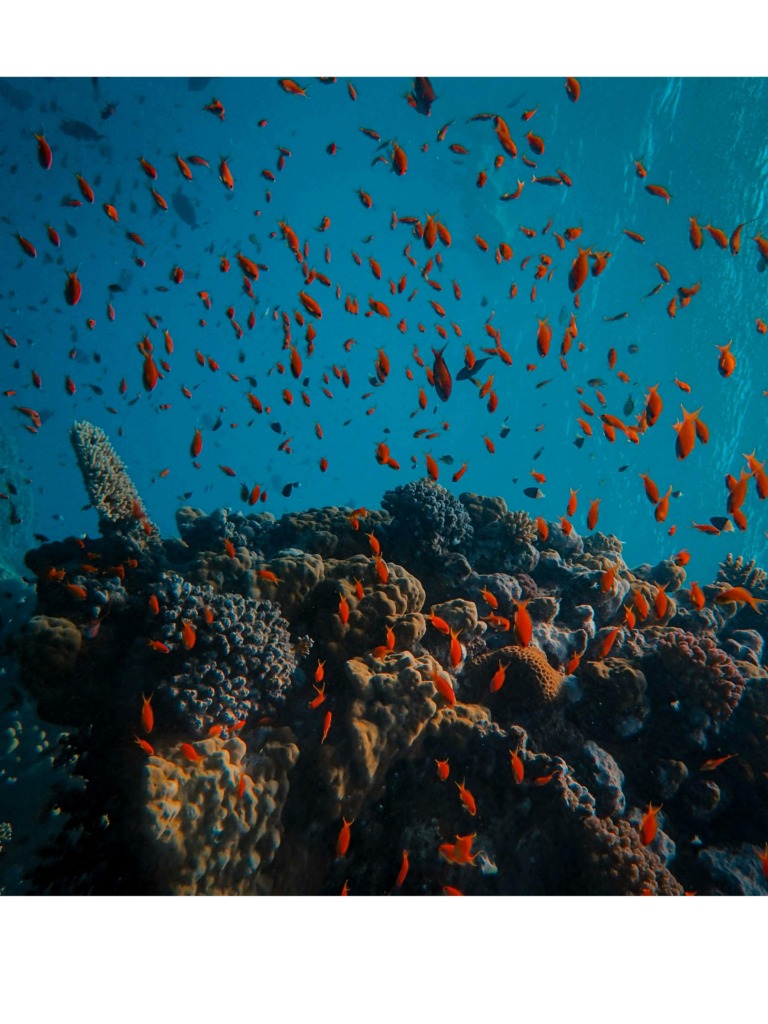
what are coral reefs?
Coral reefs are massive underwater ecosystems built by tiny marine animals known as coral polyps. These organisms live in colonies and secrete calcium carbonate, which forms the hard skeleton that gives coral reefs their structure.
Coral reef ecosystems are not formed overnight. They develop over thousands of years through the continuous accumulation of coral skeletons. Even after coral organisms die, their calcium carbonate skeletons remain behind and contribute to the growth of the reef. This slow process creates some of the largest and most complex ecosystems in the marine environment.
Coral reefs are often called the “rainforests of the ocean” because of their extraordinary biodiversity. Although they cover less than 1% of the ocean floor, they support approximately 25% of all marine species.
The Partnership Between Corals and Zooxanthellae
One of the most remarkable features of reef-building corals is their relationship with microscopic algae known as zooxanthellae. These algae live within coral tissues and provide energy to the coral through photosynthesis. They are also responsible for the vibrant colors seen in healthy coral reefs.
In return, the coral provides the algae with protection and access to sunlight. This mutually beneficial relationship allows corals to thrive in nutrient-poor tropical waters.
However, not all corals depend on zooxanthellae. Deep-water corals that live in cold, dark environments obtain much of their energy by capturing plankton and organic particles from the surrounding water.
Ecological Importance of Coral Reefs
Coral reefs provide food, shelter, nursery grounds, and breeding habitats for numerous marine organisms. Approximately 25% of marine fish and many other species depend on healthy coral reefs during some stage of their life cycle.
Coral reefs also provide valuable ecosystem services by:
- Protecting coastlines from waves, storms, and erosion.
- Supporting fisheries and food security.
- Generating income through tourism and recreation.
- Contributing to medical research and pharmaceutical development.
Globally, coral reefs provide billions of dollars in economic benefits each year.
Types of Coral Reefs
Coral reefs are commonly classified into three major types:
Fringing Reefs
Fringing reefs grow directly along coastlines and are the most common type of coral reef worldwide.
Barrier Reefs
Barrier reefs occur offshore and are separated from the mainland by deeper lagoons.
Atolls
Atolls are ring-shaped reefs that surround a central lagoon and often form around submerged volcanic islands.
Threats to Coral Reefs
Despite their ecological importance, coral reefs face numerous threats.
Natural Threats
- Coral diseases
- Predators
- Storms and extreme weather events
Human-Induced Threats
- Pollution
- Sedimentation
- Unsustainable fishing practices
- Climate change
One of the most serious threats is climate change. Rising sea temperatures can cause corals to expel their zooxanthellae, resulting in a phenomenon known as coral bleaching. If stressful conditions persist, coral mortality may occur.
Coral Reefs in Somalia
Somalia possesses both fringing reefs and patch reefs that support significant marine biodiversity. Studies have recorded approximately 27 coral genera and 63 coral species within Somali waters.
Fringing coral reefs occur mainly along the southern coastline, extending from Adale to the Kenyan border. These reefs are particularly well developed within the Bajuni Archipelago of Lower Juba, southern Somalia.
Patch reefs are primarily found along the Gulf of Aden, where they occur in scattered formations.
Coral development is generally less extensive in northern Somalia because seasonal upwelling brings cold, nutrient-rich water to the surface. These conditions reduce water clarity and limit the photosynthetic activity of zooxanthellae, which can restrict coral growth.
The Bajuni Archipelago
The Bajuni Archipelago, locally known as “Shandhaa,” is located in Lower Juba, southern Somalia, between Kudhaa and Buurgaabo. The islands contain some of the country’s most important marine habitats, including coral reefs, mangrove forests, and seagrass beds.
These interconnected ecosystems support high biodiversity and serve as important nursery and feeding grounds for numerous marine species.
Conclusion
Coral reefs are among the most valuable ecosystems on Earth. Built over thousands of years by tiny coral polyps, they support an extraordinary diversity of marine life while protecting coastlines and supporting human livelihoods. In Somalia, coral reefs are concentrated mainly along the southern coast and within the Bajuni Archipelago, where they play a crucial role in maintaining marine biodiversity. Protecting these ecosystems is essential for the future health of Somalia’s marine environment.