
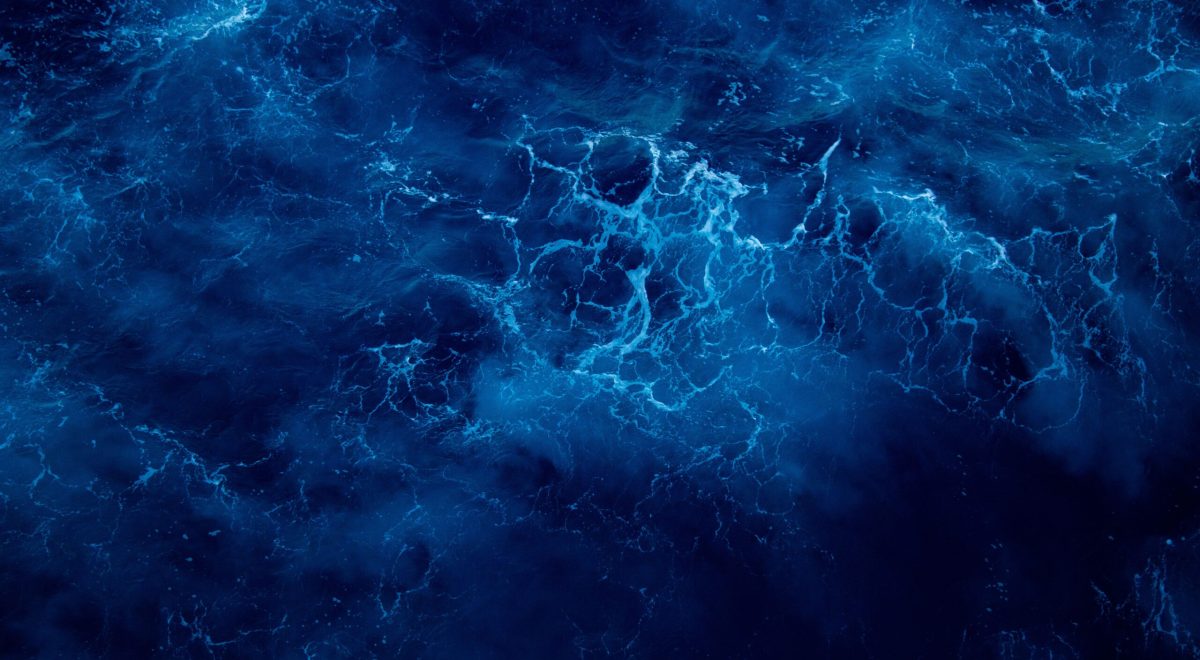
Far below the waves lies an enormous world that humans rarely see. Beyond the brightly lit surface waters, the ocean becomes progressively darker, colder, and more difficult to explore. This vast environment is known as the deep sea.
The deep sea is not an empty region of the ocean. It contains diverse communities of fish, crustaceans, mollusks, corals, sponges, microorganisms, and many other organisms that have evolved remarkable adaptations for living under extreme conditions.
Although the deep sea covers a huge part of our planet, it remains one of Earth’s least understood environments. Scientists continue to discover new species and previously unknown habitats as exploration technologies improve.
What Is the Deep Sea?
The deep sea is generally considered to begin at around 200 meters below the ocean surface, where sunlight becomes greatly reduced. However, the amount of light continues to decrease with depth, and below approximately 1,000 meters, sunlight no longer reaches the ocean in meaningful amounts.
The ocean can be divided vertically into several zones according to depth and the availability of light:
| Ocean zone | Approximate depth | Main characteristics |
|---|---|---|
| Epipelagic | 0–200 m | Sunlight supports photosynthesis |
| Mesopelagic | 200–1,000 m | Twilight zone; very little light |
| Bathypelagic | 1,000–4,000 m | Complete darkness |
| Abyssopelagic | 4,000–6,000 m | Extremely cold and high pressure |
| Hadalpelagic | 6,000 m and deeper | Deep trenches and extreme pressure |
These boundaries are approximate, and conditions vary between locations.
The Twilight Zone
Between approximately 200 and 1,000 meters lies the mesopelagic zone, commonly called the twilight zone.
Only a small amount of sunlight reaches this region, and the intensity decreases rapidly with depth. There is not enough light for normal photosynthesis, so organisms living here cannot depend directly on sunlight in the same way that phytoplankton do in surface waters.
The twilight zone contains many fishes, squid, jellyfish, crustaceans, and other organisms. Some species migrate vertically through the water column, moving toward shallower waters to feed and returning to deeper water during the day.
This daily movement is known as diel vertical migration and is one of the largest regular movements of animals in the ocean.
A World Without Sunlight
Below approximately 1,000 meters, the ocean enters the aphotic zone, where sunlight does not penetrate.
This creates a fundamental difference between the surface ocean and the deep sea.
At the surface, phytoplankton use sunlight to carry out photosynthesis and produce organic matter that supports marine food webs. In the deep ocean, photosynthesis cannot occur because there is no sunlight.
Instead, much of the food reaching the deep ocean originates from the surface.
Marine Snow: Food Falling From Above
One of the most important processes connecting the surface ocean with the deep sea is known as marine snow.
Marine snow consists of particles of organic material that slowly sink through the water column. These particles can include dead phytoplankton, zooplankton, fragments of organisms, fecal material, and other organic matter.
As this material sinks, deep-sea organisms can consume it.
Some particles are broken down by microorganisms before reaching the seafloor, while others continue downward and contribute organic material to deeper ecosystems.
This process creates an important connection between life in the sunlit ocean and life in the darkness below.
The Deep Sea Is Cold
As depth increases, ocean temperatures generally decrease.
Below about 200 meters, deep waters have an average temperature of approximately 4°C, although temperatures vary depending on location, water masses, and geological settings.
This cold environment affects the metabolism, growth, movement, and reproduction of deep-sea organisms.
Many deep-sea animals have slow growth rates and adaptations that allow them to survive in environments where food can be scarce.
Extreme Pressure
Pressure is another major challenge in the deep ocean.
Water pressure increases by approximately one atmosphere for every 10 meters of depth. At 1,000 meters, the pressure is already around 100 times the atmospheric pressure at the surface, in addition to the pressure of the atmosphere itself.
Deep-sea organisms have evolved specialized adaptations that allow their cells, proteins, membranes, and bodies to function under these conditions.
Animals that live at great depths are therefore not simply surface animals that happen to swim downward. Many are specifically adapted to their deep-water environment.
How Do Deep-Sea Animals Survive Without Light?
Deep-sea organisms have developed remarkable strategies for finding food, communicating, avoiding predators, and locating mates.
Bioluminescence
One of the most spectacular adaptations is bioluminescence.
Bioluminescence is the production of light by living organisms. In the deep ocean, where sunlight is absent, biological light can serve several purposes.
Animals may use it to:
- Attract prey
- Communicate
- Find mates
- Confuse predators
- Camouflage themselves against faint light from above
For many deep-sea animals, producing or detecting light is far more useful than relying on normal vision.
Large or Specialized Eyes
Some animals living in the twilight zone have highly sensitive eyes that allow them to detect extremely small amounts of available light.
Others live so deep that vision becomes less important and rely more heavily on chemical signals, touch, vibration, or other sensory systems.
Large Mouths and Expandable Stomachs
Because food can be unpredictable in the deep sea, some predators have adaptations that allow them to consume relatively large prey when an opportunity appears.
This is particularly useful in an environment where meals may be separated by long periods of scarcity.
Deep-Sea Corals and Sponges
The deep sea also contains important benthic habitats, including deep-sea corals and sponge communities.
Unlike shallow-water reef-building corals that depend on sunlight through symbiotic algae, many deep-sea corals live in darkness and obtain their food by capturing particles and organisms from surrounding water.
Deep-sea coral structures can provide habitat for other marine organisms, increasing the complexity of the seafloor ecosystem.
Deep-sea habitats can also include seamounts, submarine canyons, ridges, plains, trenches, cold seeps, and hydrothermal vents.
Hydrothermal Vents: Life Without Sunlight
One of the most extraordinary deep-sea environments is the hydrothermal vent.
Hydrothermal vents form where geologically heated water emerges through openings in the seafloor. The surrounding environment can contain high concentrations of chemicals that support specialized microbial communities.
Instead of relying directly on sunlight, microorganisms at these sites can obtain energy through chemosynthesis.
Chemosynthetic microorganisms use energy from chemical reactions involving inorganic compounds to produce organic matter. They can form the foundation of food webs supporting specialized animals around vents.
This discovery changed scientists’ understanding of where life can exist.
It demonstrated that ecosystems do not always need sunlight as their immediate source of energy.
Cold Seeps
Another unusual deep-sea environment is the cold seep.
Cold seeps occur where fluids containing chemicals such as methane and other hydrocarbons emerge naturally from the seafloor.
Like hydrothermal vents, cold seeps can support communities based largely on chemosynthetic microorganisms.
However, cold seeps and hydrothermal vents are not the same. Hydrothermal vents are associated with geologically heated fluids, while cold seeps release relatively cool fluids from the seafloor.
The Deep-Sea Food Web
The deep-sea food web is strongly connected to processes occurring in the upper ocean.
A simplified pathway can look like:
Sunlight → phytoplankton → zooplankton → sinking organic matter → deep-sea organisms
But this is not the only pathway.
At hydrothermal vents and cold seeps, another pathway occurs:
Chemical energy → chemosynthetic microorganisms → specialized animals → predators
Therefore, deep-sea ecosystems demonstrate that marine food webs can be supported through different sources of energy.
Why the Deep Sea Matters
The deep sea is important for several reasons.
Biodiversity
It provides habitat for an enormous variety of organisms, many of which remain poorly understood or undiscovered.
Carbon cycling
Organic material sinking from the surface transfers carbon into deeper waters and sediments. Deep-ocean processes therefore form an important part of the global carbon cycle.
Nutrient cycling
Microorganisms and animals break down organic material and transform nutrients within deep-water ecosystems.
Scientific discovery
The deep sea contains geological and biological environments that can improve our understanding of evolution, oceanography, climate processes, and the limits of life.
Human Impacts on the Deep Sea
Although the deep sea may appear far removed from human activity, it is not isolated from human impacts.
Potential pressures include:
- Climate change
- Ocean warming
- Ocean acidification
- Plastic and other pollutants
- Overfishing of deep-water species
- Damage from some fishing activities
- Disturbance of deep-sea habitats
- Potential impacts from future seabed resource extraction
Because many deep-sea organisms grow slowly and reproduce relatively slowly, some populations may recover slowly after disturbance.
This makes understanding deep-sea ecosystems essential before major human activities are expanded into these environments.
Exploring the Deep Sea
Studying the deep ocean is extremely difficult.
The enormous pressure, darkness, cold temperatures, distance from shore, and high cost of operating research vessels make deep-sea research challenging.
Scientists use technologies such as:
- Remotely operated vehicles (ROVs)
- Autonomous underwater vehicles (AUVs)
- Research submersibles
- Deep-sea cameras
- Sonar systems
- Sediment samplers
- Environmental sensors
These technologies allow researchers to observe organisms and habitats that cannot be studied effectively from the ocean surface.
Even today, much of the deep ocean remains poorly explored. NOAA notes that high-resolution mapping has covered only a fraction of the global seafloor, illustrating how much remains to be learned.
The Deep Sea and Somalia
Somalia’s long coastline borders the western Indian Ocean and the Gulf of Aden, placing the country within an important regional oceanographic environment.
Somalia is particularly well known for its seasonal coastal upwelling, which brings cold, nutrient-rich water toward the surface during the southwest monsoon. This process strongly influences productivity in the upper ocean.
However, the Somali marine environment does not end at the surface.
The deeper waters beneath Somalia are part of the wider Indian Ocean system, where water masses, currents, oxygen, temperature, nutrients, and biological processes interact across great depths.
Deep-water environments therefore deserve greater attention in Somalia’s marine research.
Studying these environments could improve understanding of:
- Deep-water biodiversity
- Fish distribution
- Ocean circulation
- Carbon cycling
- Nutrient transport
- Deep-sea habitats
- Connections between surface productivity and deeper ecosystems
However, it is important not to assume that every deep-sea habitat known elsewhere occurs along Somalia’s coast. Detailed local surveys are needed to establish which deep-sea communities and geological features are actually present in Somali waters.
Why More Deep-Sea Research Is Needed
The deep sea represents one of the greatest remaining frontiers in marine science.
For Somalia, research into deeper waters could complement existing work on fisheries, coral reefs, seagrasses, mangroves, marine mammals, and other coastal ecosystems.
Better knowledge would help scientists understand how Somalia’s entire marine environment functions—from the sunlit surface waters to the deep seafloor.
It could also provide valuable information for sustainable fisheries management and future marine conservation.
Conclusion
The deep sea is a vast, dark, cold, and high-pressure environment, but it is far from lifeless.
From microscopic organisms and sinking marine snow to deep-sea fish, corals, sponges, hydrothermal vents, and chemosynthetic communities, life has developed extraordinary strategies for surviving where sunlight cannot reach.
For Somalia, the deep ocean represents an important but relatively underexplored part of the country’s marine environment. As marine research and technology develop, studying these deeper ecosystems could reveal new species, ecological relationships, and information about the processes that connect Somalia’s coastal waters with the wider Indian Ocean.
The ocean does not end where sunlight disappears. Beyond the familiar surface lies another enormous world—one that science is only beginning to understand.
Key Facts
| Feature | Deep-sea environment |
|---|---|
| General starting depth | Around 200 m |
| Complete darkness | Generally below about 1,000 m |
| Temperature | Often around 4°C in deep waters |
| Pressure | Increases by about 1 atmosphere every 10 m |
| Primary food source | Sinking organic matter in many areas |
| Alternative energy source | Chemosynthesis at environments such as vents and seeps |
| Major habitats | Water column, seamounts, canyons, deep coral habitats, vents, seeps, plains and trenches |
| Major adaptations | Bioluminescence, pressure tolerance, specialized feeding and sensory systems |